
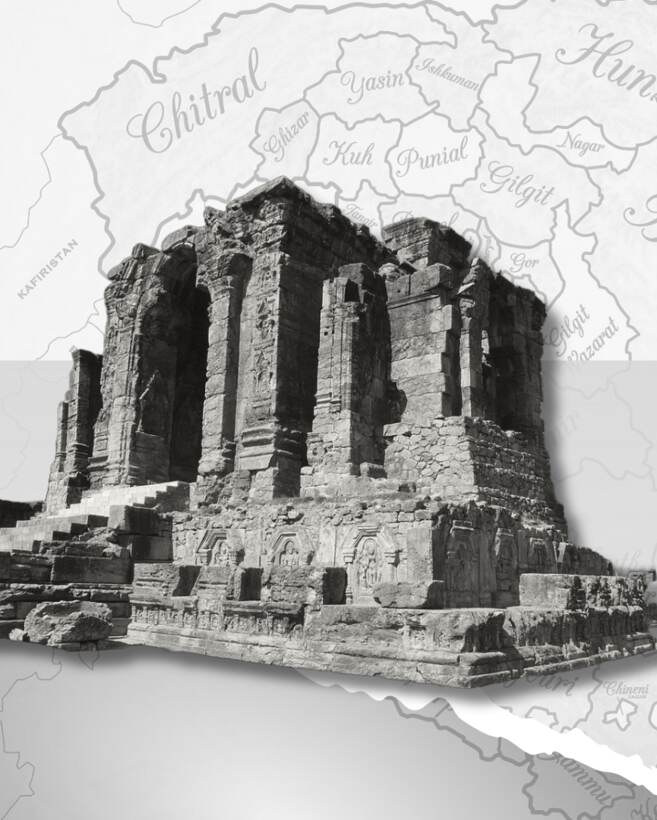

rich tapestry of
History
The Kasheer History Foundation collects, preserves and exhibits the composite cultural heritage of Kashmir — building toward a permanent museum, one travelling exhibition at a time.
“Understanding our past is essential for protecting our identity — and passing our traditions on to future generations.”
Founded in 2024 by siblings Sunanda Nehru Ganju and Ranjan Nehru, KHF builds on the legacy of their father Pushkar Nath Nehru, whose scholarship became the 2011 book Satisar to Kashmir. What began as a family's inheritance is becoming a civic space for a shared history.
Two gatherings, one growing movement
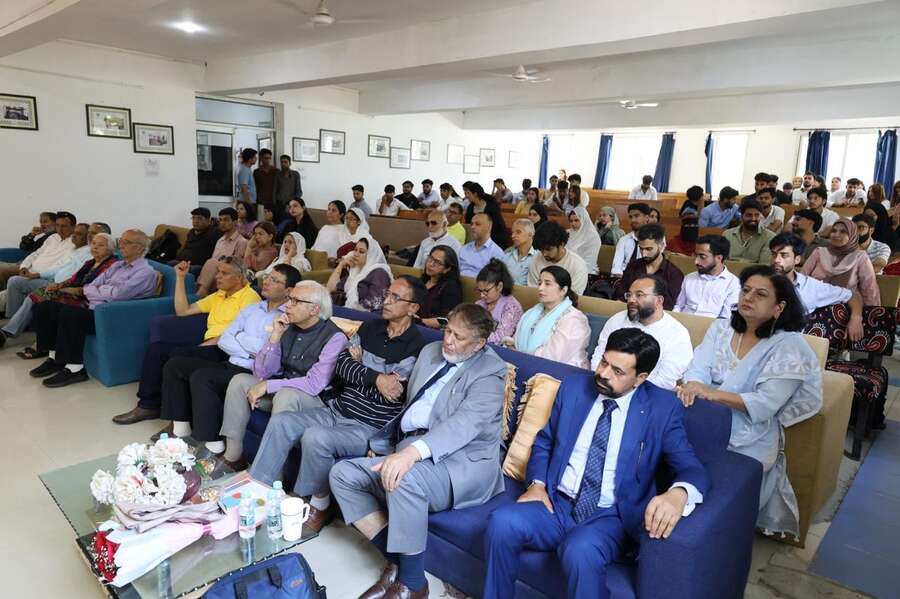
A Kaleidoscopic View of Kashmir's Cultural History
Co-hosted with SSM College of Engineering — a youth-facing seminar on lake conservation, syncretic tradition and heritage, closing with “Youth as Ambassadors of Kashmiri Heritage.”
The 2026 Cultural Festival
Three days, twenty-plus scholars and artists, five millennia — from Kashmir Shaivism and ancient archaeology to living crafts, cuisine and contemporary art.
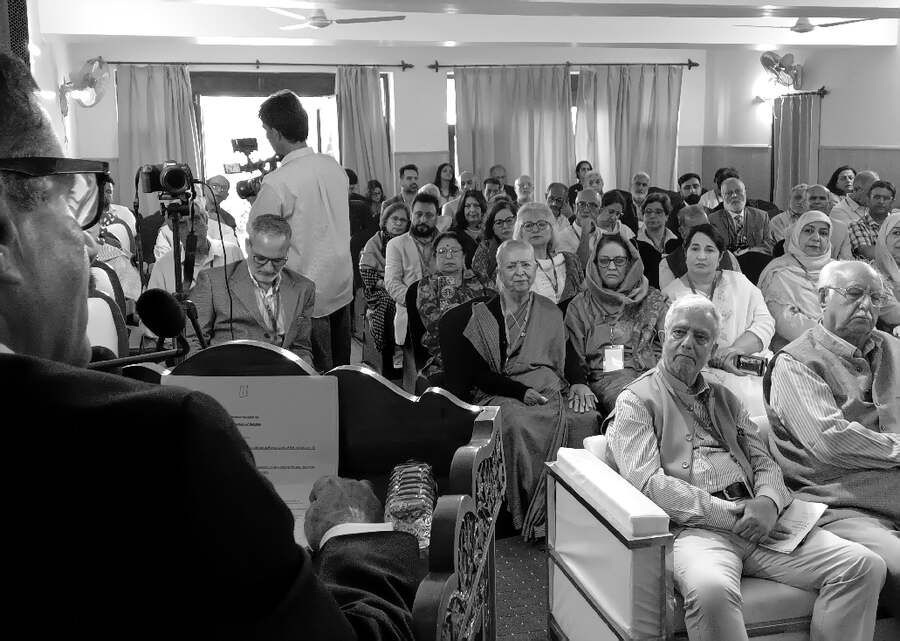
Built on a family's scholarship
The driving force behind the Foundation and its programmes. TISS-trained social worker; author of Hope in Despair: Stories of Courage in Kashmir (2019).
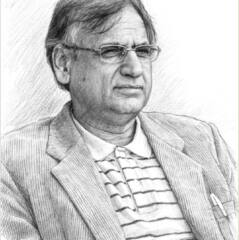
Senior corporate lawyer of 35+ years; painter, poet and sculptor under the pen name Ra' Naru.
Help carry this forward
A family's inheritance,
the Valley's memory
How one scholar's lifelong study of Kashmir became a foundation — and a museum in the making.
The Kasheer History Foundation began with a book. Pushkar Nath Nehru spent a lifetime studying the ancient history and philosophy of his homeland; his scholarship was published posthumously in 2011 as Satisar to Kashmir — a work tracing the Valley from its origins in legend to its layered, composite present.
Inspired by that inheritance, his children — Ranjan Nehru and Sunanda Nehru Ganju — founded the Kasheer History Foundation in 2024 as a Section 8 nonprofit. Its purpose: to educate the younger generation about the history of Kashmir, foster intercultural dialogue, build social cohesion, and decode the mysticism and Sufism that form the bedrock of Kashmiri identity.
Through the collection, preservation and exhibition of artifacts, manuscripts and narratives, KHF is working toward a permanent museum — beginning, in the meantime, with exhibitions that travel to where people are.
“By shifting from exclusive repositories of the past to dynamic civic spaces, the Kasheer History Museum intends to create a unifying space that could nurture and inspire Kashmiris to focus on their shared history and culture.”
What we set out to build
Mission
Preserve and showcase the rich, diverse and ancient history of Kashmir — a civilisation stretching back over five thousand years — through the collection, preservation and exhibition of artifacts, manuscripts and narratives, alongside the conservation of the environment and living traditions.
Vision
A permanent museum that narrates the civilisational story of Kashmir across history, art, literature and ecology — committed to scholarly rigour, inter-community dialogue, and the support of living artists and traditions.
From a book to a museum
Gatherings that carry
the work forward
Lectures, festivals and seminars that bring Kashmir's scholars, artists and young people into one room.
A Kaleidoscopic View of Kashmir's Cultural History
A one-day seminar with SSM College of Engineering — lake conservation, syncretic traditions, Kashmiri music and costume, and youth as ambassadors of heritage. Covered by Greater Kashmir and Daily Asian Mail.
Recap, photos & press →The 2026 Cultural Festival
KHF's inaugural event — thirteen sessions across three days, an art gallery, and Sufi, classical and folk performances. Phase 1 of the permanent museum.
Full programme, speakers & gallery →What's next
Smaller gatherings are in the works — school and college symposiums, oral-history recordings with elder custodians of Kashmiri culture, and the next travelling exhibition. Announcements land in the newsletter first.
Join the newsletterFirst Travelling Museum
& Cultural Festival
Confluence in the Valley — three days on the history and culture of Kashmir
KHF's inaugural Cultural Festival marked Phase 1 of the Foundation's vision for a permanent museum dedicated to Kashmir's history, culture and art. Over three days, more than twenty scholars, artists and cultural practitioners examined Kashmir's civilisational story — from ancient archaeology and Kashmir Shaivism to living crafts, cuisine, music and contemporary art.
The festival opened with the lighting of the lamp of knowledge and a virtual walkthrough of the planned museum, and closed with the Foundation's gratitude — delivered by Director Sunanda Ganju — to every scholar, artist and guest who made it a landmark in the cultural life of Kashmir.
Did you know?
The chinar has been grown in Kashmir for the past 4,000 years.
Semthan is the only site in the Valley where the layers of civilisations that thrived here over thousands of years can be found, one above the other.
Carnatic music traces its origin to Wanwun, the Kashmiri Pandit wedding song — carried south by Sarangdeva, a 13th-century Kashmiri scholar who wrote the foundational texts of the Carnatic style.
Three days at Hotel Nehrus
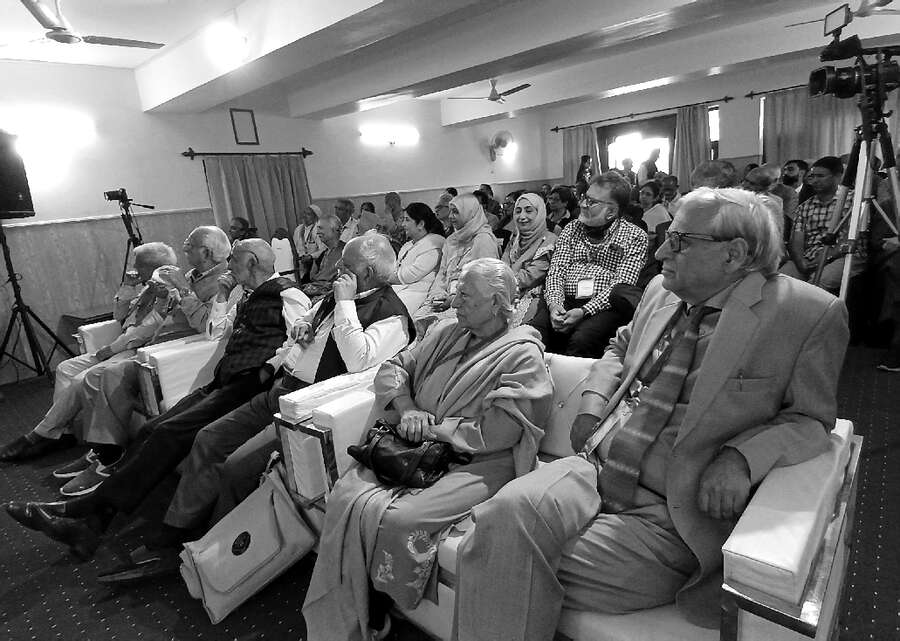
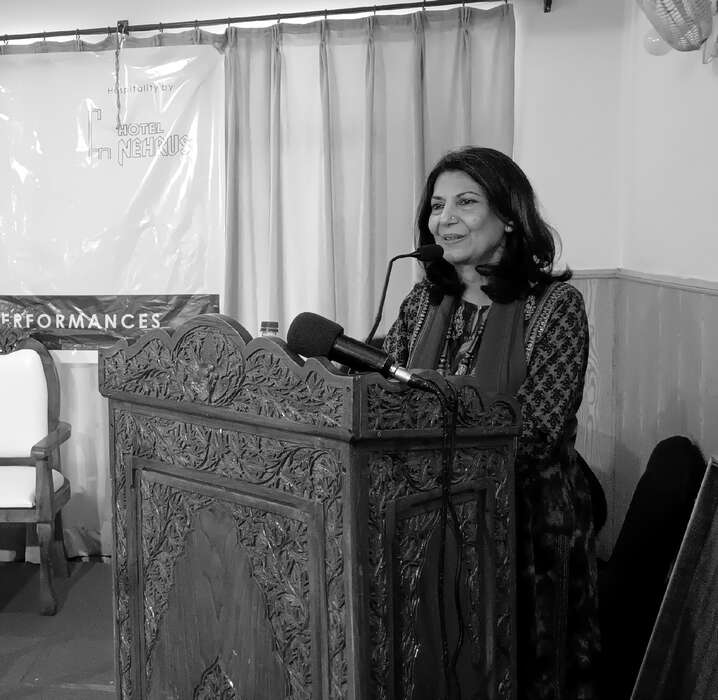
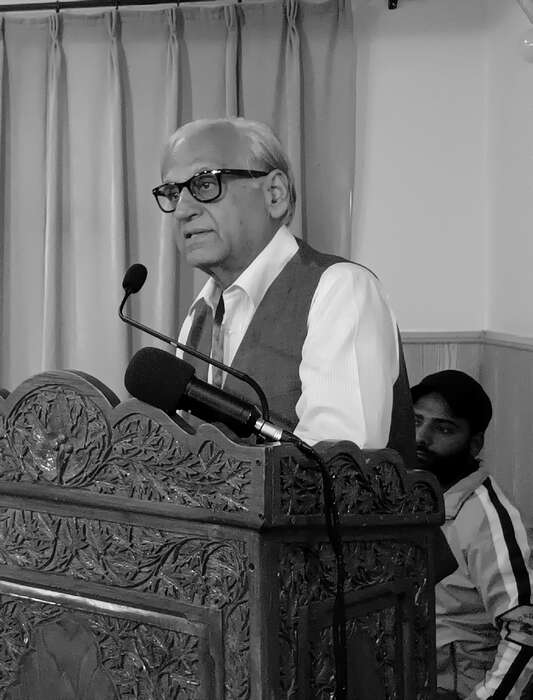
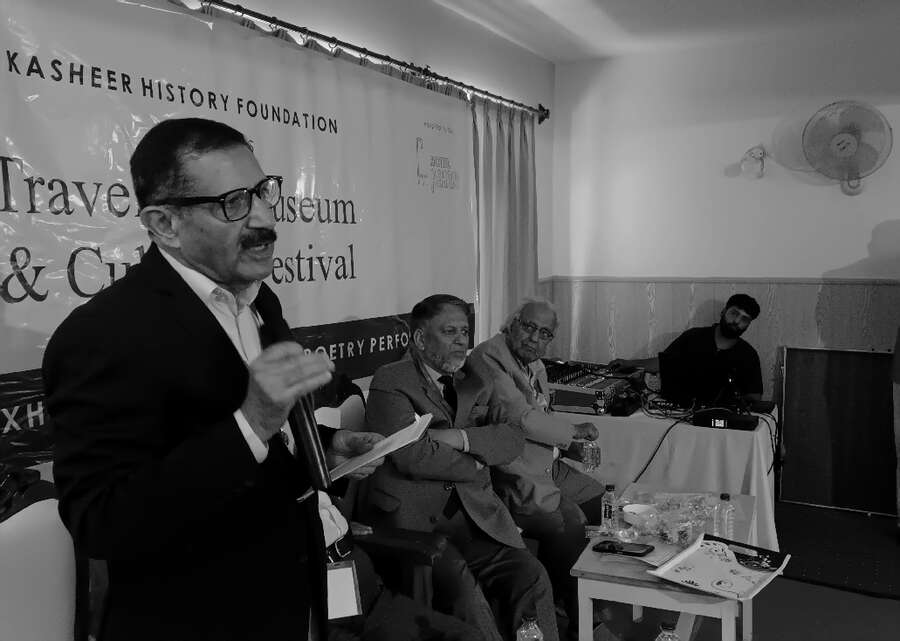
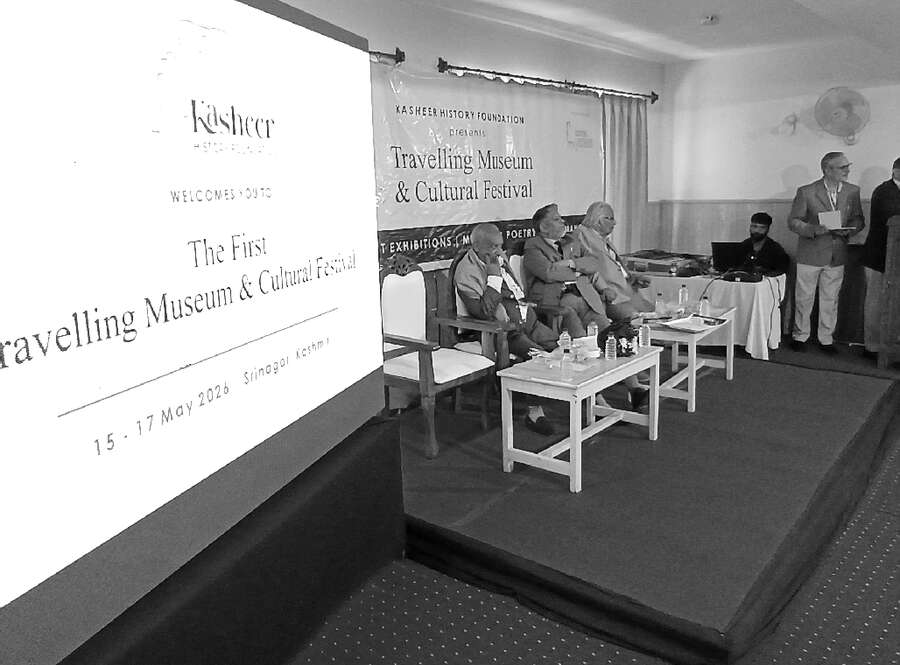
Thirteen sessions, three days
The festival, on YouTube
Longer sessions are split across several videos — each link opens the full playlist. More on the KHF YouTube channel.
The voices in the room
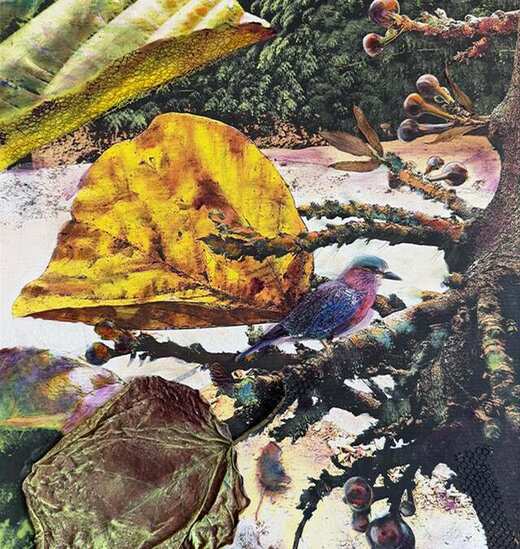
Artworks on display
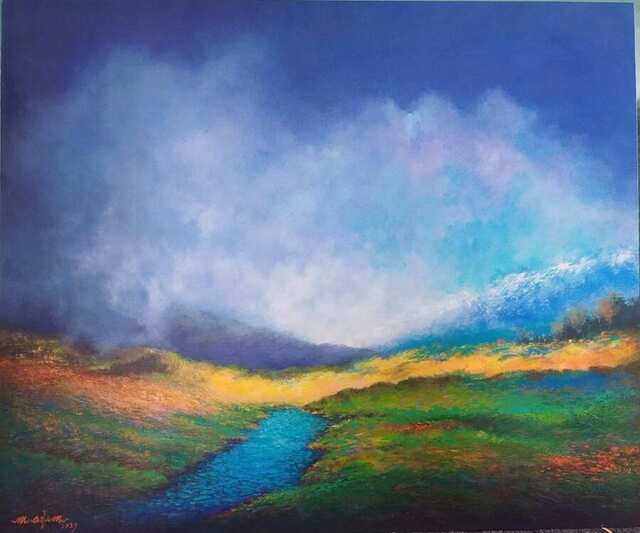
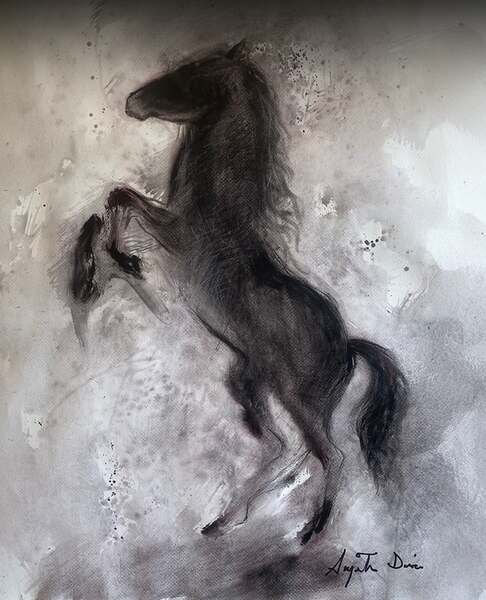

What people took away
Written to the Foundation by participants at the 2026 Cultural Festival
It was really a wonderful experience as we Kashmiris, beyond the community lines, talked about our great history of more than 5000 years. In fact, it was a celebration of our great land and people and their cultural heritage. A big thing about the event was its oneness, harmony, love and respect for each other. I am looking forward to being part of more events like this.
The Foundation and the conference initiatives are quite timely. Going by the response, I see greater involvement of researchers, musicians, artists from the radio and audio-visual media, public commentators and all do-gooders. And if that happens quickly, that would take the conference and the KHF to the top of the table.
The three-day conference held under the banner of the KHF gave the first impression that there was someone interested in finding the foundation of Kashmir and presenting its real facts to the Kashmiri people. Speeches were given on various aspects of Kashmiri history, trying to prove that not only Kashmir but also world civilisation, art, culture and literature are comparable to any nation at the world level.
Thank you for the wonderful and historic convening. Truly, KHF's passion for taking forward the unexplored cultural and pluralistic histories of the last many decades will bear fruit amongst the young folk.
“An extraordinary landmark in the cultural life of Kashmir — the Foundation's gratitude to every scholar, artist and guest who made this inaugural Festival possible.”
A Kaleidoscopic View of
Kashmir's Cultural History
A seminar for the generation that will carry it forward
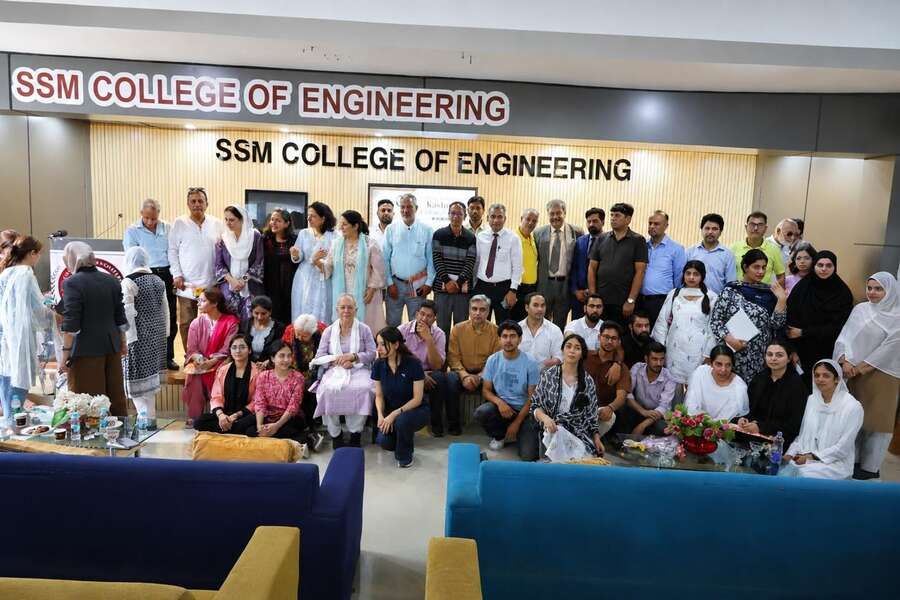
In the PressCo-hosted with SSM College of Engineering and joined by the Life Bloom Foundation, this one-day seminar brought Kashmir's cultural history into the classroom — from the conservation of its lakes to its syncretic traditions, its musical instruments and its costumes. Dilafroz Qazi, Chairperson of the College, delivered the welcome address; Sunanda Ganju, Director, KHF, inaugurated the seminar; and students from IUST, Women's College Nawakadal, Amar Singh College, Government College of Education and Women's College M.A. Road filled the hall.
A full house at Parihaspura
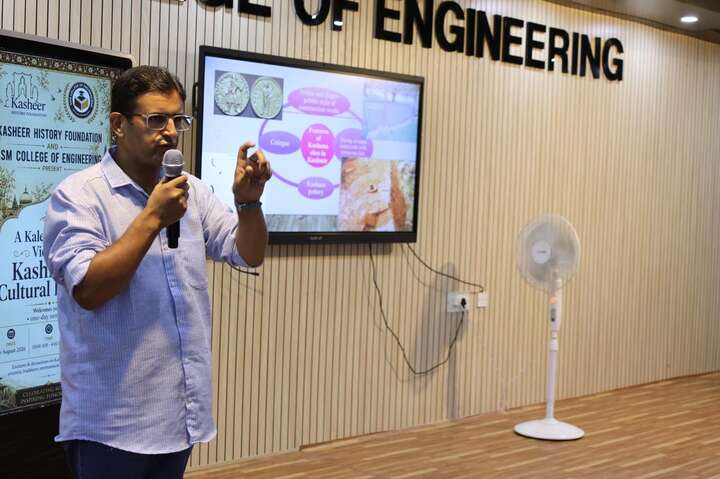
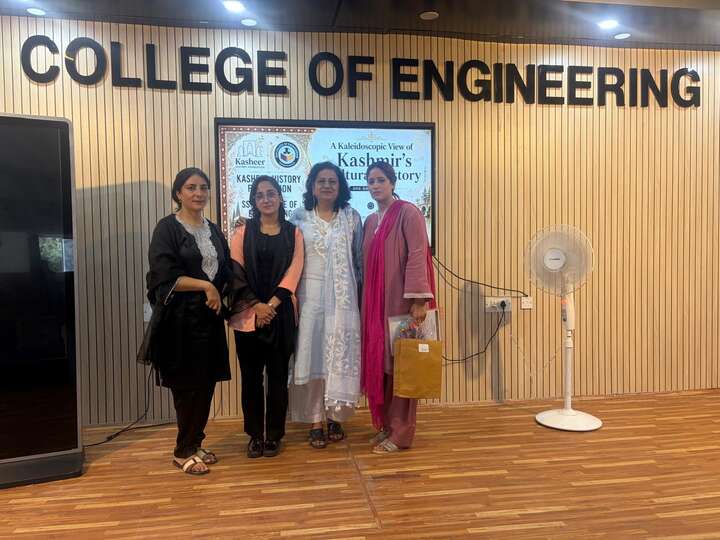
One day, ten sessions
Open a session for the speaker and what they said.
10:40 – 11:20Analysis of the CAG Audit Report on Conservation & Management of Lakes in KashmirDr. Sami Ullah Bhat · University of Kashmir
Associate Professor of Environmental Science, University of Kashmir — a specialist in limnology, stream ecology and water quality whose research centres on Kashmir's lakes, wetlands and springs.
He shed detailed light on the audit report, expressing concern over the shrinking area of Kashmir's water bodies and stressing the effective implementation of research findings and expert recommendations.
11:20 – 12:00Decoding the Past — Written, Material & Oral EvidenceDr. Abdul Rashid Lone · University of Kashmir
Senior Assistant Professor of Archaeology, University of Kashmir — a gold medallist from Aligarh Muslim University and former Ashoka Fellow, specialising in the early historic archaeology of the Kashmir Himalaya.
He showed how written, material and oral evidence together present a comprehensive, authentic picture of the region's history — reaching back nearly 3,000 years.
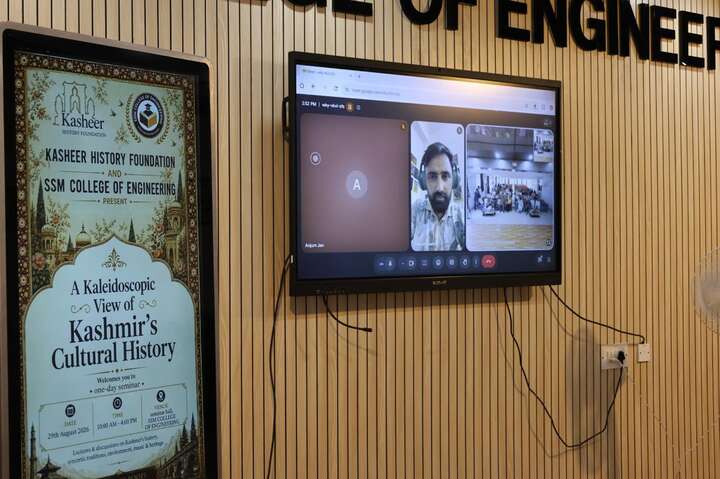
12:00 – 12:40Syncretic & Pluralist Traditions of KashmirDr. Haroon Rashid · JNU · online session
Post-Doctoral Fellow, School of Arts & Aesthetics, JNU — an early-career historian of the mystical and philosophical traditions of Kashmir.
He traced a cultural identity evolved through the interaction of diverse religious, social and cultural currents, and urged that the younger generation be familiarised with these shared foundations.
12:40 – 12:50Chief GuestAddress by the Chief GuestProf. Farooq Fayaz · Historian & literary critic
Prof. (Dr.) Farooq Ahmad Bhat — better known by his pen name Farooq Fayaz — holds a Ph.D. in History and has devoted his career to the literary and cultural history of Kashmir, including Folk-Lore and History of Kashmir.
In his presidential address he said protecting historical places, traditions and cultural identity falls to students and young people as much as to institutions.
1:20 – 1:40Virtual Walkthrough of the Museum
The hall was taken through the Foundation's plate series — five millennia of Kashmir's history, told in sequence. See the virtual preview →
1:40 – 2:20Role of Youth in Protecting the EnvironmentMuzamil Qureshi & Akash Manzoor Khan · Life Bloom Foundation
Muzamil Qureshi founded Life Bloom Foundation, a youth-led environmental initiative based in Handwara, Kupwara.
He made the case for youth-led environmental protection — a dream to protect the environment and build a more responsible society.
2:20 – 3:00Musical Instruments of KashmirDr. Muzaffar Bhat · University of Kashmir
Department of Music, University of Kashmir.
He presented the instruments that give Kashmir's music its soul — from the santoor to the rabab — and called for serious effort toward their preservation, research and transmission.
3:45 – 4:00Vote of ThanksSunanda Ganju · Director, Kasheer History Foundation
Co-founder of KHF.
She closed the seminar with the Foundation's thanks — and its invitation to every student in the hall.
Also spokeAddress to the hallNeerja Mattoo · Former Principal, Government College for Women, Srinagar
Educationist, writer and translator.
She spoke of her life's work — highlighting through writings and translations the role and contributions of women in Kashmiri culture, work she intends to continue throughout her life.
In their own words
News reporters interviewed students and speakers through the day. The recordings are being prepared and will play here.
The papers took notice
The seminar was also covered on television.
Certificates for every participant
Every student received a Certificate of Participation, jointly issued by the Kasheer History Foundation and SSM College of Engineering. Want a seminar like this at your school or college?
Bring KHF to your campusThe people carrying
Kashmir's history forward
Two founders, an eight-member board, and an advisory council of poets and historians.
Built on a family's scholarship
The primary force behind the Foundation — from its founding in 2024 to the programmes it runs today. Born in Srinagar; Master's in Social Work from the Tata Institute of Social Sciences, Mumbai. She began her career with the J&K State Social Welfare Advisory Board and has worked in the development sector since 1987, chiefly on maternal and reproductive health. Author of Hope in Despair: Stories of Courage in Kashmir (2019). She inaugurated and closed both of KHF's 2026 events.
A senior corporate lawyer with over 35 years' practice, based in Pune — and a painter, poet, sculptor and designer under the pen name Ra' Naru. Having spent his early youth in Kashmir, he draws on vivid memories of its common folk to capture the essence of the Valley's social and cultural life in paint, verse and sculpture.
“Inspired by the scholarly book, the founders have envisioned a museum that could educate the younger generation, foster intercultural dialogue, build social cohesion, and decode the mysticism and Sufism that is the bedrock of Kashmiri identity.”
A working board
Eight directors: the two founders, and the six members below.
Museologist; leads outreach to state heritage bodies and stewards the Foundation's youth engagement programme.
Historian of four decades; Fulbright & DAAD Fellow; Hon. Vice-Chancellor, Noble International University, Toronto.
Art historian, curator & museum consultant — 33 years across India and Singapore; Founding Senior Curator, Indian Heritage Centre, Singapore.
Artist; Ambassador for Peace through Art, Geneva.
The voices behind the archive
Four advisers who guide the Foundation's programmes and research. The scholars, artists and musicians who led sessions at the 2026 events are named on each event page.
The museum, before
the museum
Illustrated storyboards of Kashmir's history — from origin legend to the mystic poets — previewing the galleries the permanent museum will one day hold.
Five millennia, told in plates
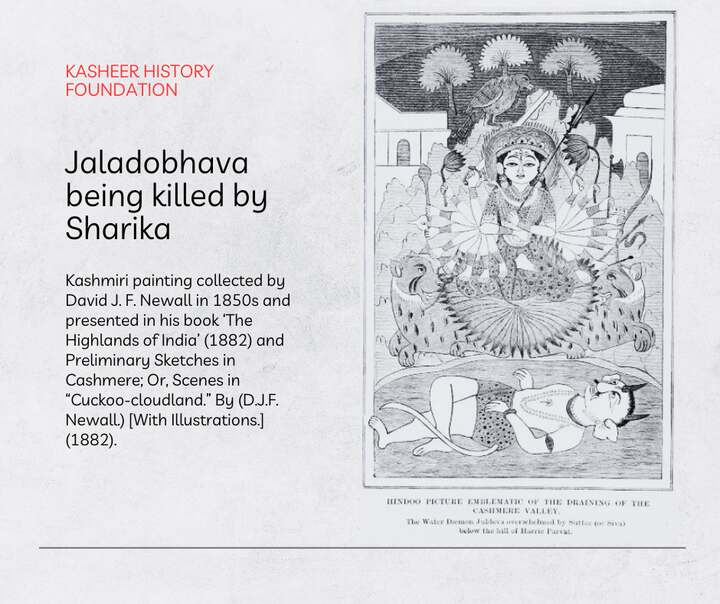
Kashmir's Mythical Emergence and Historical Origins
The Nilamata Purana, dating back to the 6th–8th century CE, refers to Kashmir as ‘Satidesh’. According to legend, a water demon named Jalodhbhava threatened human life, and Lord Shiva granted him immunity in water. Seeking divine help, Nila (King of Nagas) sought Ananta’s (a form of Vishnu) aid. Ananta broke the mountain barrier at Baramulla, draining the water and revealing a boat-shaped valley. This desiccation period occurred between 7000 BCE and 3500 BCE. The name ‘Kashmir’ derives from Sage Kashyap: “Kash Mar” (lake of sage Kashyapa) or “Kashyapa Meru” (Kashyapa’s Mount Meru). Another legend attached to the historical origin is that Jalodbhava was troubling people. So, Sharika devi took the form of Maina (Haer in Kashmiri) and threw a pebble at him. The pebble grew into a hill and killed the demon. So Hari Parbhat (hill of the Maina) is associated with the myth also.
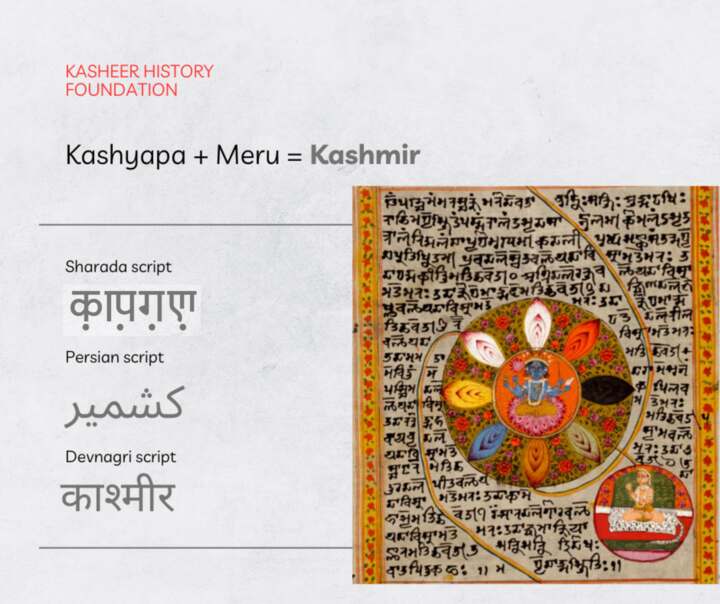
Origin of the Name Kashmir
The word Kashmir is thought to have been derived from Sanskrit and was referred to as Káśmīra. A popular local etymology of Kashmira is that it is land desiccated from water. An alternative etymology derives the name from the name of the Vedic sage Kashyapa, who is believed to have settled people in this land.
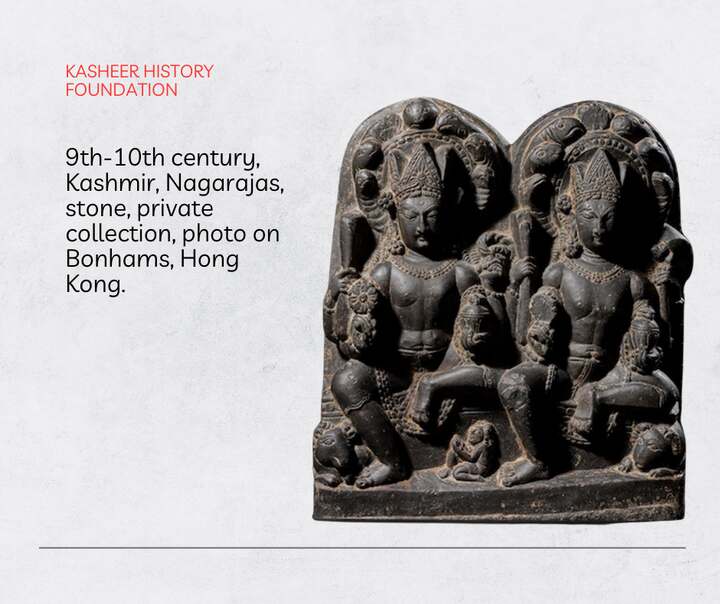
Nagas: The Original Inhabitants of Kashmir
The Nilmata has preserved highly valuable information about the inhabitants of ancient Kashmira. The original inhabitants of the Valley were the Nagas, followed by the Pisacas and the Manavas. As the original occupants of Kasmira, the Nagas were resistant to the introduction of the Pisacas and the Manavas into the Valley. However, if given a choice, they preferred the Manavas over the Pisacas. The image shows the two kings, each with a seven-naga hood, a tripartite crown with triangular leaves and rosettes, floral jewellery and matching garland, seated on a throne supported by snow lions. They have four hands, in which they hold a large vajra sceptre (reminiscent of Gandharan sculpture), a lotus, and a lotus-shaped pot with a lid. They appear to have different attributes in the upper left hand — a noose in one case and a stick or staff in the other. We learn from Mr Wilkinson at Bonhams that the seven cobras represent the other seven great Nagarajas. There is a small devotee with an offering bowl half kneeling at their feet.
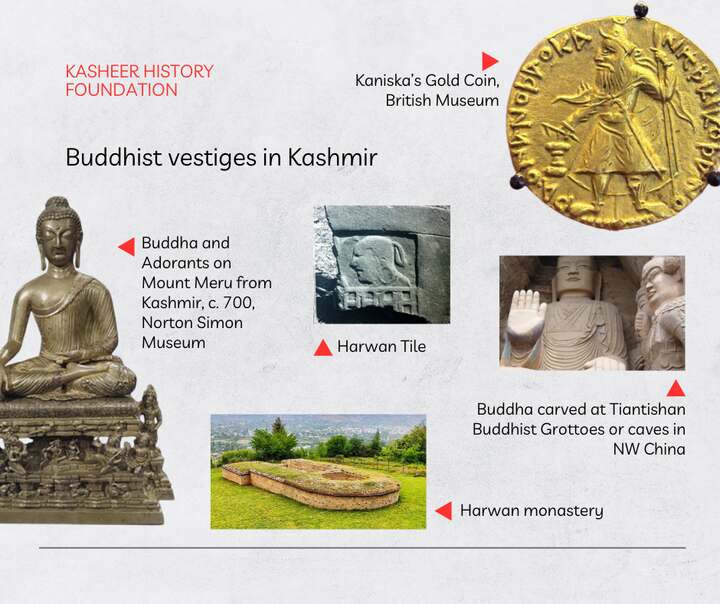
Buddhist Vestiges in Kashmir
Buddhism gained prominence in Kashmir as early as the 3rd century BC, with many Nagas adopting it. Madhyantika’s preaching, confirmed by the Tibetan work Dul-va and Chinese traveller Heuen Tsang, was instrumental in spreading Buddhism in the region. Ashoka built the city of Srinagar in the 3rd century BCE, and his son Jaluka constructed Shaivite temples in the Wangath Valley. The Kushan Kings supported Buddhism by building viharas, mathas, and chaitiyas, with Kanishka hosting the fourth world Buddhist Conference in Kashmir. Buddhist ambassadors facilitated exchanges between China and Kashmir until the 6th century CE.
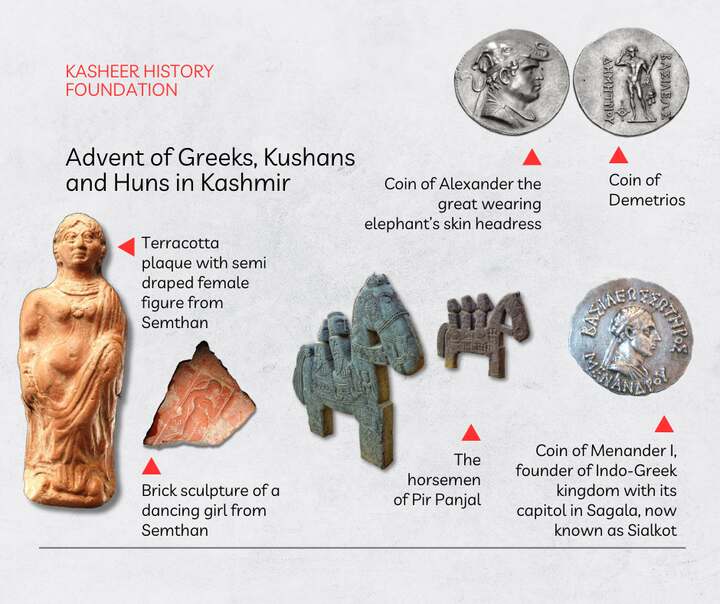
Advent of Greeks, Kushans and Huns in Kashmir
The Indo-Greek Kingdom was established when Graeco-Bactrian King Demetrius invaded the subcontinent in the 2nd century BC, ruling the southern parts of Kashmir. The Indo-Greeks, formed by Greeks from the Indian subcontinent and Bactrian Greeks, were centred in present-day northwestern India. Notable rulers like Menander (Milinda) engaged in philosophical discussions with the Buddhist saint Nagasena, recorded in the Milindapanha. Evidence of various Greek princes, such as Demetrious and Menander, is found at the Semthan archaeological site in Kashmir. Alexander the Great’s campaign in 326 BC, including the Battle of Hydaspes against Porus, saw large areas of Punjab absorbed into the Macedonian Empire. The Ghora Ghali sculptures and local legends hint at historical and cultural connections between Bactrian origins and ancient Indian epic heroes.
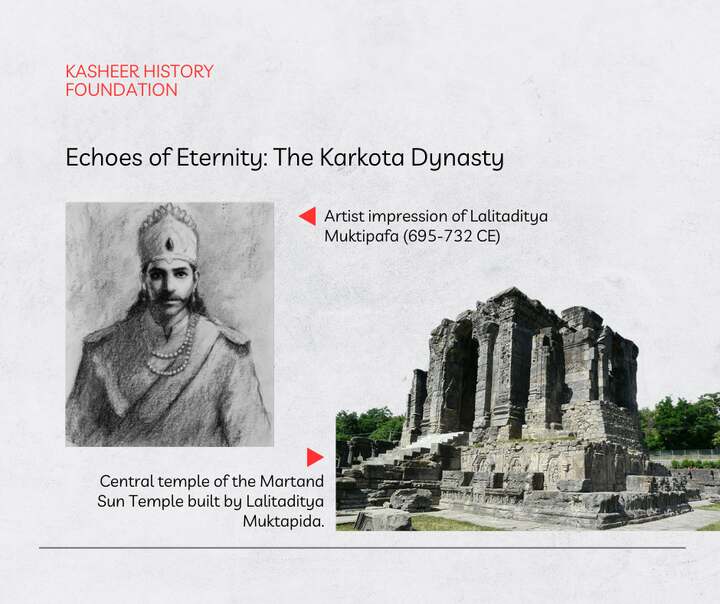
Echoes of Eternity: The Karkota Dynasty
Lalitaditya, a contemporary of the Chinese traveller Huein Tsang, ruled for 37 years and subjugated various fiefdoms like Kanyakabna, Gauda (Bengal), Kalinga, Karnatakas, Saphta Konkan (Western Ghats), Avanti (Ujjain), and Bhautas. He was a great builder, constructing many temples and towns during his reign. A devout worshipper of Lord Vishnu, Lalitaditya built a magnificent silver statue of Vishnu Parihasakesava in the town of Parihasapura, and his queen, Kamlavati, erected a large silver image of Kamalkesava (Lord Vishnu). Additionally, Lalitaditya is renowned for constructing the grand Martand Sun Temple complex, a testament to his architectural and religious contributions.
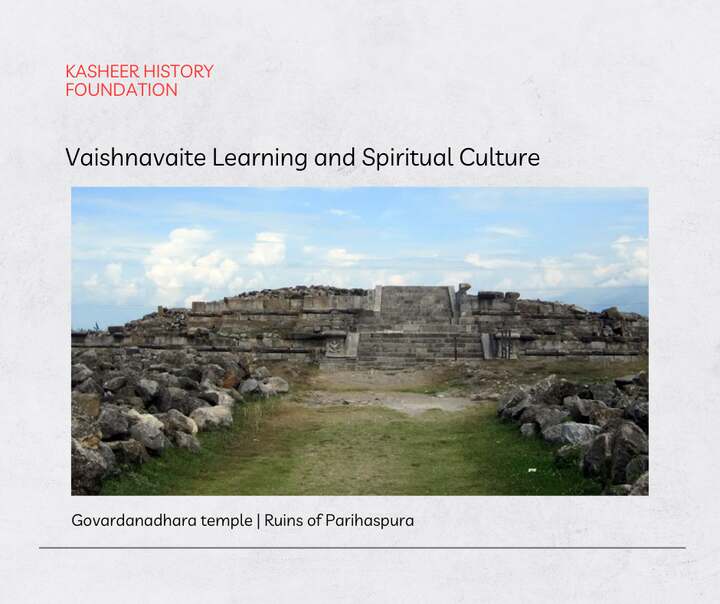
Vaishnavaite Learning and Spiritual Culture
Ancient and medieval Kashmir was a significant seat of Vaishnavaite learning and spiritual culture. Works like the Nilamatapurana, Rajtarangini, and the Kashmiri Vishnudharmottara Purana contain anecdotes of this tradition.
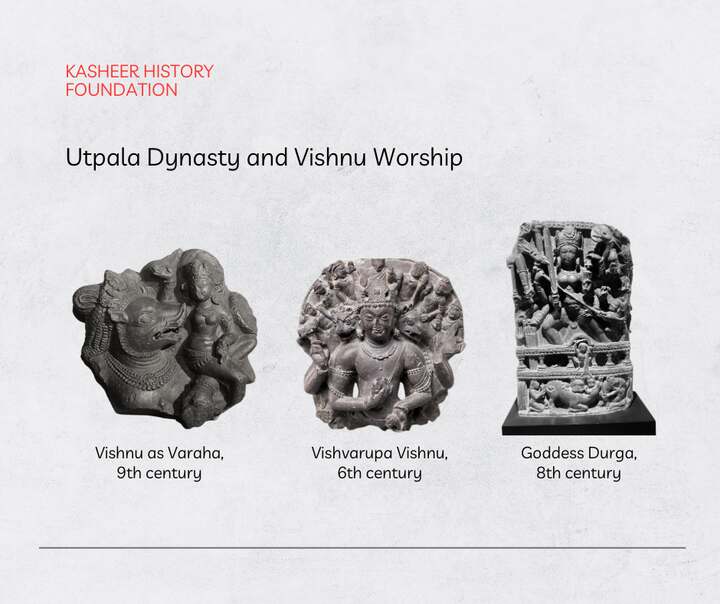
Utpala Dynasty and Vishnu Worship
The Utpala dynasty, succeeding the Karkota dynasty, also revered Lord Vishnu in various forms. Temples like Vishnu Avantiswami and Suraveramnswami were constructed during their rule. Other deities in the early Kashmirian pantheon included Surya, Kartikeya, Ganesha, Agni, Lakshmi, Durga, Ganga, Yamuna, and Kamdev.
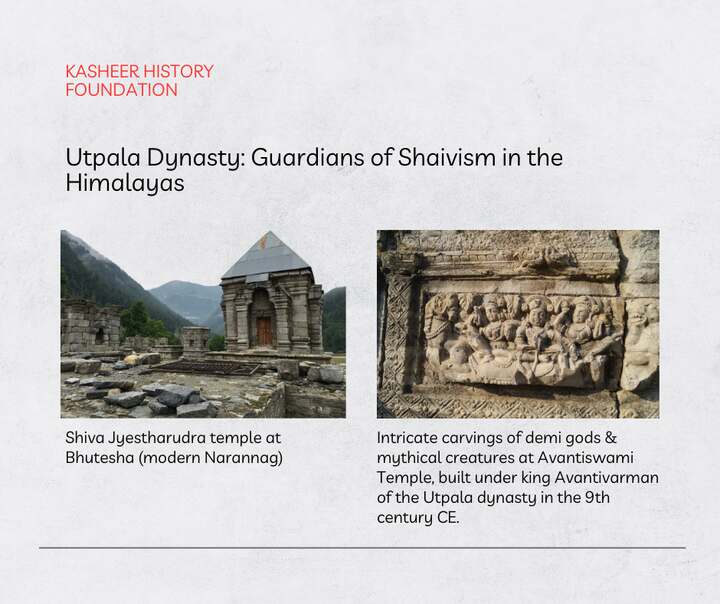
Utpala Dynasty: Guardians of Shaivism in the Himalayas
The Utpala Dynasty, which ruled Kashmir from the 9th to 10th centuries, is renowned for its guardianship of Shaivism in the Himalayas. Founded by Avantivarman in 855 CE, the dynasty succeeded the Karkota Empire and established its capital at Avantipur. Avantivarman’s reign marked Kashmir’s golden age, characterised by excellent governance, self-control in wealth distribution to Brahmins, and patronage of literature and arts. Notable poets and scholars of his time included Ratnakar, Muktakana, Anandavardhana, and Sivasvamin. A devout follower of Shaivism, Avantivarman also supported Bhatta Kallata, a Shaivite pupil of Vasugupta. His reign saw significant infrastructure developments, including the regulation of the river Vitasta by the engineer Suyya, and the construction of the town of Avantipur with temples dedicated to Lord Vishnu and Lord Shiva.
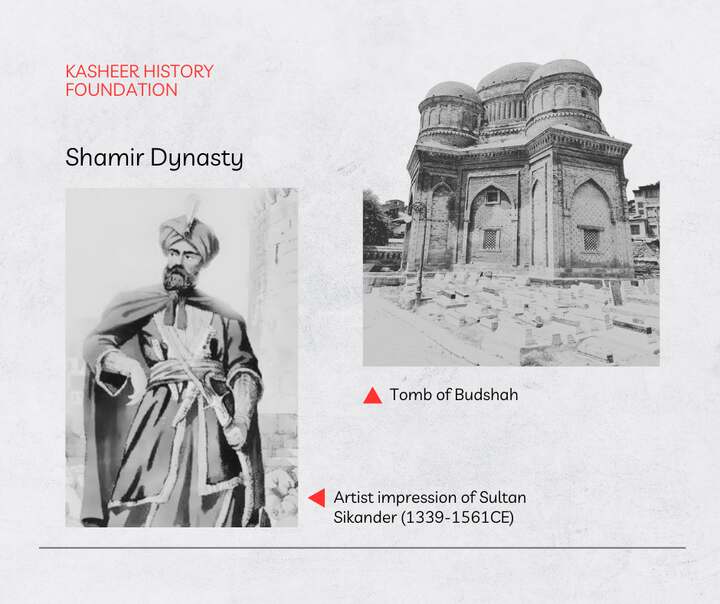
The Shamir Dynasty
The Shamir dynasty established Muslim rule in Kashmir and promoted Islam by encouraging Sayyids from Central Asia to migrate, who then held key positions of power and wealth. Influenced by the Sayyids, Sultan Sikander persecuted non-Muslims, destroying their religious sites and forcing Hindus to either accept Islam or face death, leading many to seek refuge in regions like Goa, Karnataka, Konkan, and Maharashtra. Sultan Sikander also supported Turks and Persians, who introduced innovations in wooden architecture, stone cutting, and cotton processing, benefiting the lower classes and encouraging trade and exchange of goods. He is notorious for the destruction of temples, including Martand and Parihaspora. In contrast, Zaina-ul-Abidin (Budshah), who ruled from 1420 to 1470 CE, is universally acclaimed as a pious and benevolent monarch. He called back the Hindus who were driven out by his father and resettled them in the Valley. Zaina-ul-Abidin promoted wood carving, papier-mâché, carpet weaving, silver and copper filigree work, and developed the Nallah Mar Canal.
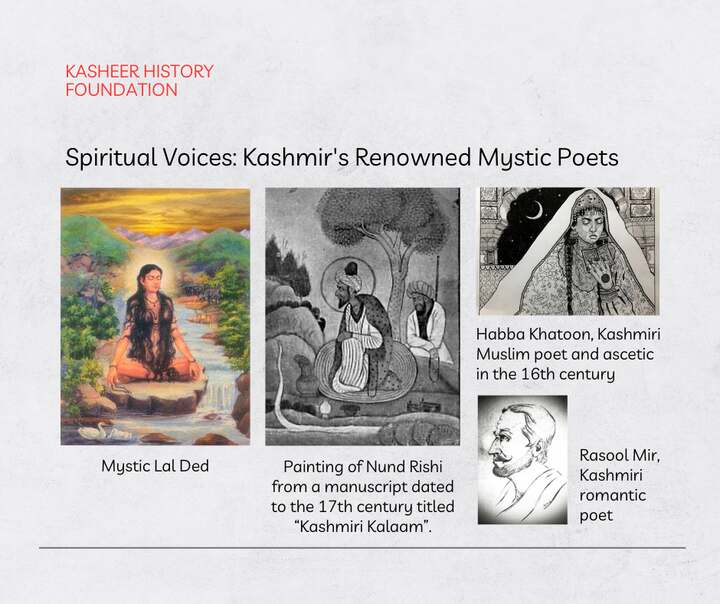
Timeless Voices: Kashmir's Renowned Mystics & Poets
Lal Ded, also known as Lalleshwari, was a 14th-century Kashmiri mystic poetess known for her profound verses and spiritual wisdom. Her poetry, written in the Kashmiri language, reflects deep philosophical thoughts and a quest for divine love. Nund Rishi, also known as Sheikh Noor-ud-din Noorani, was a contemporary of Lal Ded and the founder of the Rishi order in Kashmir. His poetry and teachings emphasised simplicity, piety, and harmony among people of different faiths. Habba Khatoon, a 16th-century Kashmiri poetess and lyricist, is celebrated for her soulful and melancholic verses that beautifully capture the themes of love, separation, and longing. Rasool Mir, another prominent Kashmiri poet of the 19th century, is known for his romantic and passionate poetry that continues to resonate with readers today.
A short look inside
The full virtual walkthrough is screened at KHF events. This is a short excerpt.
Articles from
the archive
Researched writing on Kashmir's history, art and living traditions
The Foundation is building a repository of well-researched articles — drawn from the scholars who lead its sessions, the oral histories it records, and the research studies it runs with partner institutions. The first pieces are being written now.
The shelf is still being filled
Articles will appear here as they are written and reviewed. Subscribe and we will write to you when the first one is published.
Three kinds of writing
Session papers
Full-length versions of the talks given at KHF seminars and festivals — archaeology, Shaivism, syncretic tradition, music and craft — written up by the scholars who delivered them.
Oral histories
Transcribed and edited conversations with elder custodians of Kashmiri culture, recorded before the knowledge they hold goes unrecorded.
Research notes
Findings from the small research studies KHF runs with partner universities — students and scholars working together on heritage and living traditions.
Help carry this forward
A permanent museum is built by many hands — donors, partner institutions, and young volunteers most of all.
Every contribution funds conservation, research, exhibitions and youth programming — and brings the permanent museum closer. KHF also welcomes CSR support from companies.
Write to us about giving →KHF works with academic and cultural institutions on research, funding and joint programming — from campus seminars to shared research studies.
Propose a partnership →Students join through campus symposiums and internships, earn certificates of participation, and train on KHF modules to present Kashmir's history themselves.
Join the youth programme →For schools & colleges
KHF brings half-day symposiums to campuses — talks, the museum's virtual walkthrough, music, and certificates for every participant, in the model of the SSM College seminar.
For researchers
A digital database of experts and a research resource pool are in development, alongside oral-history documentation of Kashmir's elder custodians of culture.
Carrying the work with institutions
The Foundation works with academic and educational institutions to spread awareness of Kashmiri culture — bringing seminars to campuses, and building research alongside the people who teach and study here.
SSM College of Engineering
KHF co-hosted A Kaleidoscopic View of Kashmir's Cultural History with SSM College at Parihaspura in August 2026 — a full day of sessions for students, closing with certificates for every participant. It is the first of about six such seminars planned across colleges and universities in the Valley.
See how the day went →Research with universities
The Foundation is planning small research studies on heritage and living traditions in collaboration with institutions including the University of Kashmir and the Centre of Central Asian Studies — work that gives students practical research experience and adds to what is known about the region.
Propose a collaboration →KHF seeks partnerships and support from institutions such as ICHR, ICSSR, ICCR, IGNCA, UGC and the Sahitya Akademi — and CSR support from companies that want to back Kashmir's cultural heritage — for research, funding and joint programming.
Write to the Foundation
Questions, partnerships, donations, campus symposiums, or a scholar we should know — we read everything.
Srinagar GPO, Gagribal, Boulevard,
Srinagar 190001